
Quick Summary
This article sheds light on the difficult reality faced by makhana farmers in Bihar, a region responsible for 90% of the world's makhana production. Despite the high market value of makhana as a 'superfood', the hardworking farmers who cultivate it receive only a tiny fraction of the profits, often struggling to make ends meet.
In This Article
▶ Watch the full video on YouTube
This article sheds light on the difficult reality faced by makhana farmers in Bihar, a region responsible for 90% of the world’s makhana production. Despite the high market value of makhana as a ‘superfood’, the hardworking farmers who cultivate it receive only a tiny fraction of the profits, often struggling to make ends meet.
The Farmer’s Plight
During a visit as part of the Voter Adhikar Yatra, the harsh conditions and low earnings of makhana farmers and labourers were brought to light. Many of these individuals, often from marginalised communities like the extremely backward classes, Dalits, and Bahujans, work tirelessly for 10-15 minutes to produce just one kilogram of makhana. They are paid a mere 40 rupees per kilo for their labour.
These farmers often don’t even own the land they cultivate, working on land owned by others for crops like makhana or paddy. After a four-month working season, many are forced to migrate to cities like Mumbai or Delhi in search of work, earning similar low wages of around 400-500 rupees a day.
The Processing Pain
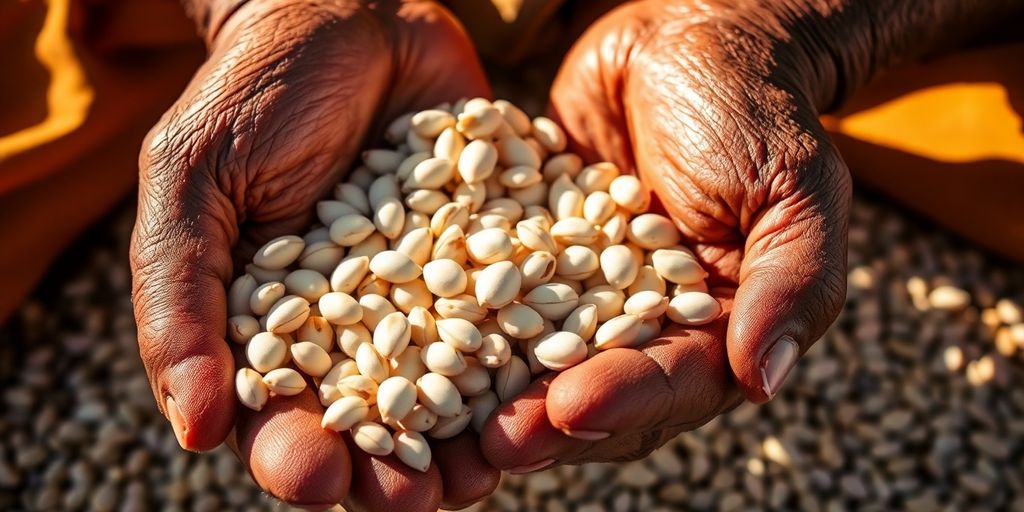
The process of preparing makhana is labour-intensive and requires significant effort. After harvesting, the makhana is washed and then dried. A crucial step involves cleaning the makhana by hand, often using feet, which can take up to an hour and lead to swollen or even cut feet due to sharp debris. This is followed by further drying, where careful attention must be paid to the sun’s intensity, as excessive heat can spoil the product.
Even after these arduous steps, the farmers face further challenges. The makhana is then sorted by size, with different grades like 15mm, 20mm, and 18mm. The final stage involves roasting, where the makhana is heated until it pops open. This process is so hot that even a fraction of a second’s delay in handling can cause severe burns.
Market Manipulation and Low Returns
Farmers report that the price of makhana has seen a significant drop. Factors like a 50% tariff imposed by countries like America have impacted the market, leading to reduced prices for farmers. While makhana can sell for thousands of rupees per kilogram in big cities, the farmers receive very little. The current rate for makhana is around 28,000-29,000 rupees per quintal, a price that has fallen from previous highs.
One of the biggest issues is the lack of direct marketing channels for the farmers. They are forced to sell their produce to middlemen or traders who buy it at low prices and then sell it at much higher rates in the market. This system benefits only a small percentage of intermediaries, leaving the vast majority of farmers with minimal profit.
The Need for Support
Farmers expressed a strong desire for government support, including the establishment of factories to process the makhana locally. They believe that having factories would provide them with better prices and more stable employment. However, they also worry that if factories take over the entire process, their current jobs might be affected, though they are confident they would still be employed in these new facilities.
Financial struggles are common, with many farmers taking out loans or borrowing money to sustain their operations. The current situation leaves them with very little profit, making it difficult to even cover daily expenses. Despite working long hours and employing multiple people, their daily earnings are often less than what they need.
Education and Future Prospects
The demanding nature of the work often forces young people to stay away from home, impacting their education. While some, like a 20-year-old interviewed, are pursuing higher education alongside their work, the economic reality means they often have to contribute to family expenses. Many feel that their degrees are not providing them with job opportunities, leaving them with skills but no employment.
Key Takeaways
- Low Farmer Income: Farmers receive a minimal share of the final price of makhana, despite significant labour input.
- Exploitative Middlemen: A lack of direct market access forces farmers to sell to intermediaries at low prices.
- Labour-Intensive Process: Makhana production involves physically demanding and sometimes dangerous manual labour.
- Need for Infrastructure: Farmers require support like local processing units and factories to improve their economic situation.
- Impact on Education: The need to work often hinders the educational pursuits of young farmers.
- Market Volatility: External factors like international tariffs can negatively impact makhana prices for farmers.
The current system benefits a few at the expense of the many, highlighting the need for policies that ensure fair prices and better livelihoods for the hardworking makhana farmers.
Frequently Asked Questions: Makhana farmers
What is this article about?
This article sheds light on the difficult reality faced by makhana farmers in Bihar, a region responsible for 90% of the world's makhana production. Despite the high market value of makhana as a 'superfood', the hardworking farmers who cultivate it receive only a tiny fraction of the profits, often struggling to make ends meet.
What are the key takeaways?
Low Farmer Income: Farmers receive a minimal share of the final price of makhana, despite significant labour input. Exploitative Middlemen: A lack of direct market access forces farmers to sell to intermediaries at low prices. Labour-Intensive Process: Makhana production involves physically demanding and sometimes dangerous manual labour. Need for Infrastructure: Farmers require support like local processing units and factories to improve their economic situation. Impact on Education: The need to work often hinders the educational pursuits of young farmers.
Where can I watch the original video?
This page is a short written summary by BlackTree. Watch the full original video on YouTube: https://www.youtube.com/watch?v=mab_6OZEvos
What topics does this article cover?
This article covers: The Farmer's Plight; The Processing Pain; Market Manipulation and Low Returns; The Need for Support; Education and Future Prospects.